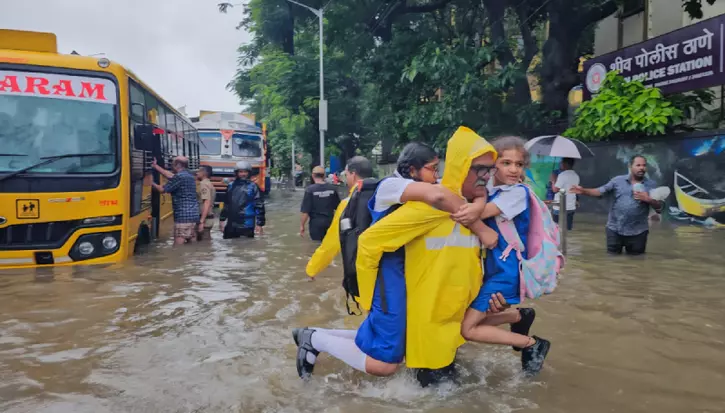
Current Rainfall Situation
- The India Meteorological Department (IMD) has reported above-normal rainfall across Mumbai in mid-August 2025.
- Some parts of the city recorded over 120 mm of rainfall in just 24 hours.
- Suburban areas like Andheri, Kurla, and Dadar experienced severe waterlogging.
- Train services on the Western and Central lines were delayed by up to 30–45 minutes due to flooding on tracks.
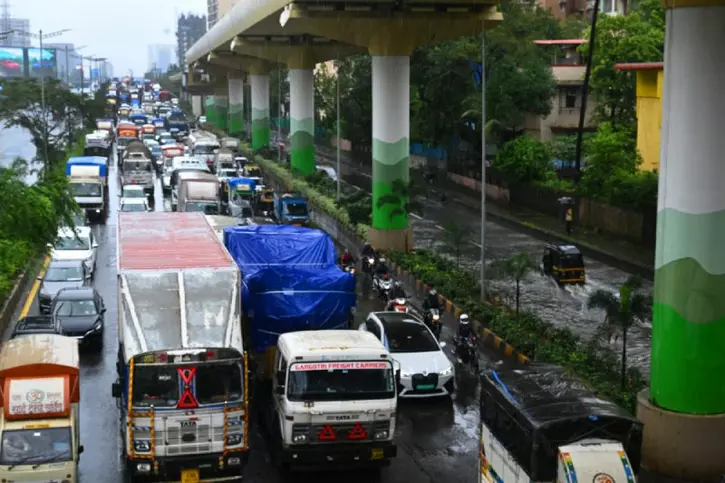
- Road traffic was severely impacted, with vehicles stuck in long jams across major junctions.
Impact on Daily Life
- Schools & Colleges: Authorities declared holidays in several low-lying areas.
- Air Travel: Flights at Mumbai’s Chhatrapati Shivaji Maharaj International Airport were delayed due to poor visibility and water on runways.
- Local Trains: The city’s lifeline faced massive disruptions, affecting millions of commuters.
- Health Concerns: Cases of dengue, malaria, and waterborne diseases are expected to rise due to stagnant water.
Government & Civic Response
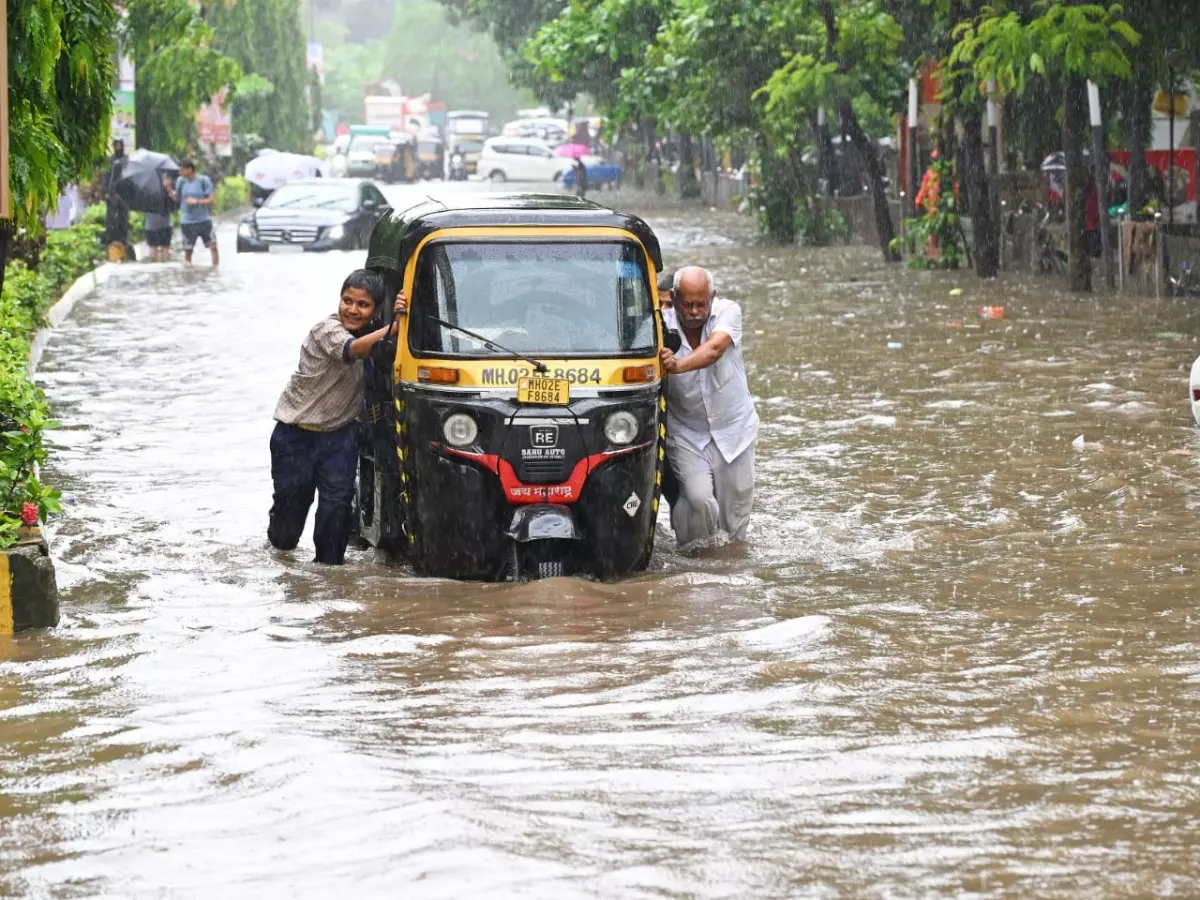
- BMC (Brihanmumbai Municipal Corporation) deployed extra staff for pumping out floodwater from critical zones.
- Emergency hotlines and disaster management teams are active to help citizens.
- IMD issued a red alert for heavy to very heavy rainfall in the next 48 hours.
- Residents in low-lying areas have been advised to avoid unnecessary travel.
Citizens’ Struggles and Resilience
Despite challenges, Mumbaikars continue to showcase their never-give-up spirit:
- Volunteers distributed food and drinking water to stranded commuters.
- Social media was flooded with updates, helplines, and traffic alerts.
- Many companies encouraged work from home to reduce travel stress.
Rainfall Data – Last 48 Hours (Mumbai Regions)
| Region | Rainfall (mm) | Status of Waterlogging |
|---|---|---|
| Colaba | 280 mm | Severe |
| Santacruz | 298 mm | Severe |
| Andheri | 210 mm | Moderate |
| Dadar | 240 mm | Severe |
| Kurla | 190 mm | Moderate |
| Thane | 260 mm | Severe |
Key Highlights
- Red Alert issued by IMD ⚠️ for Mumbai, Thane, and Raigad districts.
- Local trains (Western & Central lines) were running with 15–20 minutes delay due to waterlogging.
- Over 25 flights were delayed at Mumbai Airport.
- BMC (Brihanmumbai Municipal Corporation) has activated 24x7 control rooms for emergency response.
- Several low-lying areas like Sion, King’s Circle, Kurla, and Andheri Subway reported waist-deep water.
Technical Weather Details
- Monsoon Activity: The heavy downpour is caused by a low-pressure system over the Arabian Sea combined with monsoon trough movement.
- Wind Speed: 35–45 km/h gusts recorded along coastal areas.
- Humidity: 92–95% contributing to extreme discomfort.
- Next 48 Hours: IMD forecasts more heavy to very heavy rainfall with thunder and lightning.
Impact on Daily Life
- Transportation: BEST buses diverted on over 22 routes.
- Education: Schools and colleges in affected zones remained closed.
- Power Cuts: Reported in parts of Thane and Navi Mumbai.
- Health Risk: Waterborne diseases like leptospirosis and dengue may rise due to stagnant water.
Government Response
- BMC helpline numbers active for 24 hours: 1916 📞
- Over 200 water pumps deployed to clear waterlogging.
- Disaster Management Units (DMU) on high alert with NDRF teams deployed.
- Continuous monitoring of Mithi River water levels to prevent flooding.
Safety Tips During Heavy Rain
✅ Avoid stepping into floodwater (risk of electrocution & disease).
✅ Use Google Maps live updates to check traffic diversions.
✅ Keep power banks charged in case of long power cuts.
✅ Store drinking water and dry food items.
✅ Follow BMC & IMD official Twitter handles for verified updates.
Historical Rainfall Comparison
| Year | Highest 24-Hour Rainfall (mm) | Remarks |
|---|---|---|
| 2005 | 944 mm | Record-breaking flood |
| 2017 | 315 mm | City standstill |
| 2021 | 234 mm | Severe but managed |
| 2025 | 298 mm (current) | Among top 5 events |
Conclusion
The Mumbai rains of August 2025 are a reminder of the city’s vulnerability during monsoons. While authorities are working round-the-clock, citizen awareness and preparedness play a crucial role. With climate change increasing extreme weather events, Mumbai must adopt long-term flood management systems to ensure safety and resilience.