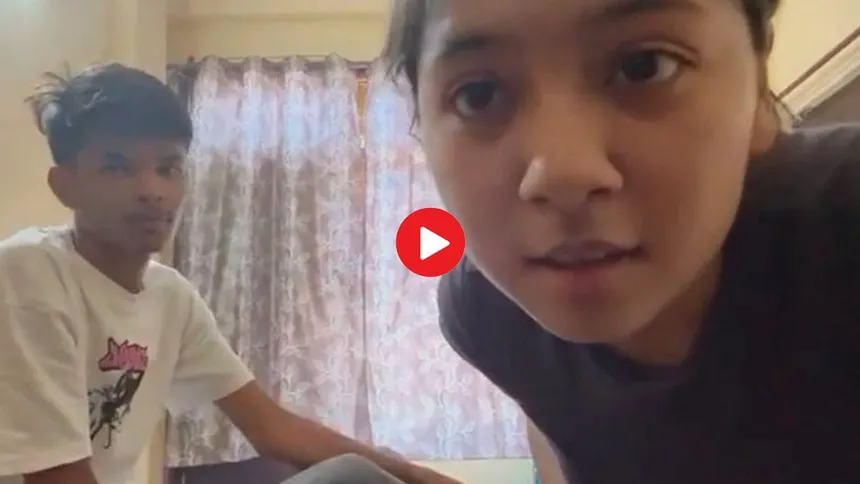
The "19:40 Minute" Viral Video Mystery: Misinformation, Deepfakes, and The Dark Side of Social Media
Date: December 03, 2025
Category: Cyber Safety / Social Media Trends
Reading Time: 6 Mins
In the last 72 hours, Indian social media platforms—Instagram, X (formerly Twitter), and Telegram—have been flooded with searches for a "19-minute viral video." What began as a rumored leak has spiraled into a chaotic mix of misinformation, mistaken identity, AI-generated deepfakes, and mass phishing scams.
If you have seen hashtags like #19MinVideo or #ViralMMS trending, this article breaks down what is actually happening.
📉 The Anatomy of the Trend
Unlike typical viral trends driven by a specific clip, this one thrives on curiosity and rumor.
- The Rumor: Claims of a private video, allegedly 19 minutes and 32–40 seconds long, involving a couple.
- The Spread: Comment sections on random influencers’ posts filled with “Link please” and “19 min?”—boosting the topic algorithmically.
- The Reality: No verified source. Many links circulating are phishing traps designed to steal passwords or hack WhatsApp accounts.
🚫 The Case of Mistaken Identity: Sweet Zannat
One of the most harmful effects of this trend was the targeting of innocent creator Sweet Zannat, a Meghalaya-based influencer.
What Actually Happened:
- Trolls falsely claimed she was the woman in the rumored clip.
- Her posts were spammed with harassment and demands for the link.
- She released a clarification video (16M+ views) stating:
“That girl speaks English, I haven’t even studied past 12th grade. You are blaming me for someone else’s scandal.”
While she gained followers due to sympathy, this incident exposed the rapid speed of online mob injustice.
🤖 AI Deepfakes & the Rise of Fake “Season 2 / 3” Videos
Cyber experts now believe:
- Some videos circulating as "Season 2" or "Season 3" are AI-generated.
- Looped faces and mismatched lip-syncing suggest deepfake manipulation.
- Scammers are using AI to create fake adult clips to farm Telegram members and push malware.
The "Babydoll Archi" Parallel
This incident resembles the earlier case of Babydoll Archi, an AI-generated influencer created by a man to harass his ex-partner.
The 19-minute trend may be repeating a similar pattern—digital identity fraud at massive scale.
⚖️ Legal Consequences in India: Serious & Non-Bailable
Even "asking for a link" or “forwarding” explicit clips can lead to criminal charges.
Relevant Indian Laws:
| Act / Section | Offense | Punishment |
|---|---|---|
| IT Act, Section 67A | Sharing sexually explicit content | Up to 5 years jail + ₹10 lakh fine |
| IT Act, Section 66E | Violation of privacy | Up to 3 years jail + ₹2 lakh fine |
| IPC Section 354C | Voyeurism | 1–3 years for first conviction |
Police cyber cells in Maharashtra, Assam, and Karnataka are actively monitoring keywords like “19 min video link,” “full link,” and “season 2.”
Even joining Telegram groups sharing such clips can trigger cyber-surveillance.
🛡️ How to Stay Safe (2025 Edition)
-
Do Not Click Suspicious Links:
These links are the #1 method used for WhatsApp takeover scams. -
Don’t Forward or Ask for Explicit Content:
Even typing “Send link?” can be used as legal evidence. -
Fact-Check Before Reacting:
Videos now can be generated entirely by AI.
Seeing is no longer believing in 2025. -
Report Immediately:
Use Instagram/X’s built-in reporting tools to stop harassment.
🧩 Conclusion
The “19:40 Minute Video” saga is not just a scandal. It is a lesson in:
- how fast misinformation spreads
- how AI deepfakes can ruin innocent lives
- how curiosity can lead to legal trouble
- why cyber safety education is essential in India
This trend is likely a combination of AI fabrication, phishing scams, and mass mistaken identity.
The safest thing you can do is not search, not share, and not engage.
Disclaimer: This blog is for educational and awareness purposes only. It does not contain or promote explicit content. Legal data sourced from the IT Act, 2000 (India).